
The Cruelty of History – Robert Hichens, Oscar Wilde and the Long, Slow Death of Fame
A house I researched on the north Kent coast turned out to be the former holiday home of one of Britain’s most successful authors. His story reveals how temporary fame can be, but my research lead to a blue plaque for his old house – the third my research has led to – in some way perhaps resurrecting the name of Robert Smythe Hichens.
History can be cruel. As time passes by even the most famous and successful usually become forgotten and ignored. One such example is the author Robert Hichens, who for a short time was one of the biggest - and wealthiest - names in the entire literary world, but whose name now meets with dazed confusion and a shrug of the shoulders – “sorry, who?”
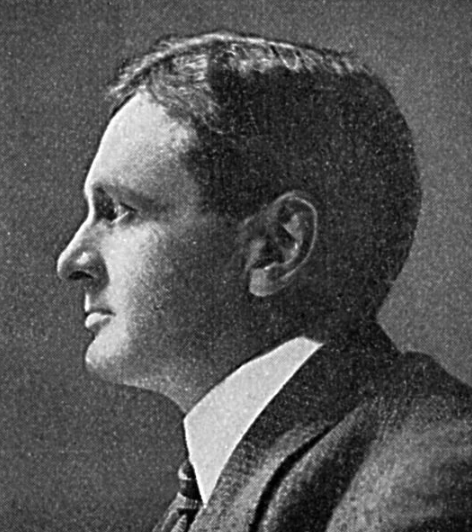
Hichens in the 1890s
The son of a rural Kent vicar, Hichens was born in 1864 into a world of genteel comfort, surrounded by vicarage servants and sycophantic parishioners, an upbringing probably giving him the self-confidence to pursue a writing career. Like many authors, Hichens started as a journalist and was hired by The World as George Bernard Shaw’s replacement as their theatre critic, giving him access to London’s cultural elite. This proved vital for the book that would make Hichens famous - The Green Carnation, a clever parody of the aesthetic, dandy world of Oscar Wilde, with the main characters clearly based upon him and his lover, Lord Alfred 'Bosie' Douglas.
Hichens knew Wilde and his retinue fairly well, especially after cruising down the Nile in 1893 with Bosie and two other acolytes, the writer E.F. Benson and general 'man-about-town' Reggie Turner. Hichens published the book anonymously - a successful strategy, for the book seemed so uncannily on point that the artistic establishment were awash with gossip as to which insider must have written it. After Hichens was revealed as the author Wilde was publicly scathing, describing The Green Carnation as "a middle-class and mediocre book” but in private was more charitable, saying "he did not think Hichens capable of anything so clever”.
An instant bestseller, The Green Carnation quickly ran through four editions before Hichens withdrew it in 1895 after Wilde’s disastrous prosecution of Bosie's father, the Marquess of Queensberry, for libel. Appalled to think he may have a hand in Wilde's downfall, Hichens was unprepared to make further money from the book's sales. The tragic irony of a book playfully parodying men suspected of homosexuality, is that Hichens himself was almost certainly also gay and would have lived in permanent fear of ruin throughout his life.
The success of The Green Carnation meant that from the late 1890s Hichens was able to become a full-time author and would go on to write over sixty novels and plays, particularly finding a loyal and lucrative audience amongst female readers. However, Hichens’ writing style has not travelled well, for not only did his prose edge towards the purple, but his work commonly featured what are now considered frivolous storylines of melodramatic love stories, paranormal activities or of implausible people driven to murder or insanity.
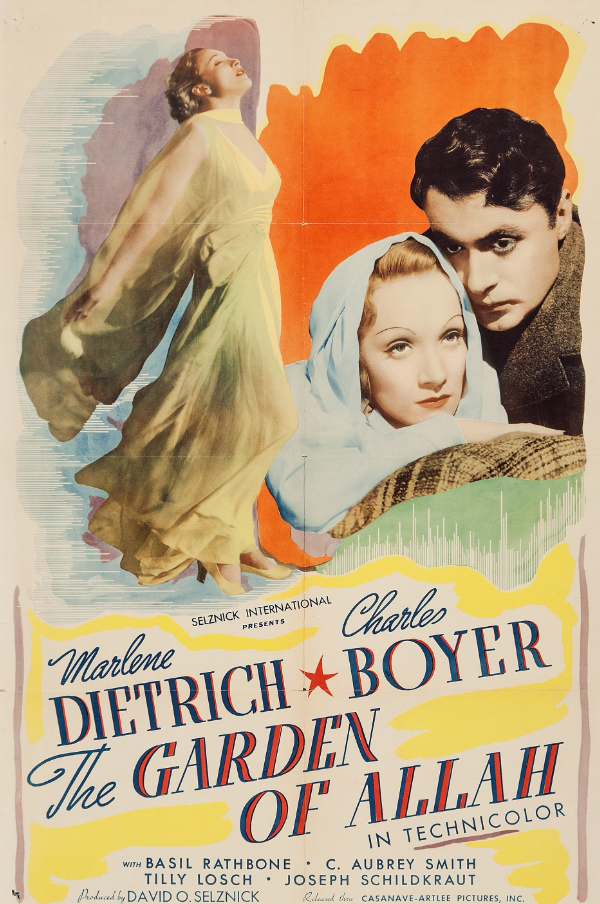
The film poster for the 1936 version of The Garden of Allah
However, although Hichens’ work has not achieved lasting literary merit, this in no way diminishes their enormous cultural impact at the time, nor the lavish success and wealth they brought to him personally. By far his greatest success was The Garden of Allah, a 1904 story of forbidden love between a monk and an English heiress, set against the lavish backdrop of the North African desert - the 'Garden of Allah' of the title. The book sold hundreds of thousands of copies in both Britain and the United States, which led to Hichens adapting it into highly lucrative theatre versions for both the West End and New York, with the 1911/12 Broadway run seen by more people than any play up to that point. If this wasn’t enough, the book was turned into no less than three Hollywood film versions - the last filmed in lavish technicolor and featuring Marlene Dietrich in the main role.
The success of The Garden of Allah meant that Hichens could afford to lead an extravagant lifestyle that most would envy. Half the year would be spent in a five-star hotel in Sicily or on extensive holidays in North Africa; back in England he lived during the week in a swanky London apartment, with weekends at his holiday home on the Kent coast, which he shared with his cook and his eccentric Italian chauffeur, Carmelo.
Money however, failed to bring Hichens inner comfort and during World War I he had a mental breakdown. Suffering from severe insomnia and an increasing state of agitation and despondency, Hichens attempted treatments ranging from what he called “strong drugs” to hypnotism, before arriving at a state of "melancholy and even morbid condition", with only the constant daily watch of close friends saving him from doing something catastrophic. One cannot help but wonder at the full cause of his near suicidal collapse - living as a gay man in an age of appalling and legalised homophobia was bad enough for anyone, but Hichens had greater to fall than most.
Forever "haunted by a horror of exposure", Hichens went to his grave living a double-life and his autobiography, published three years before his death in 1950, was part of an attempt to deflect suspicions about him - not just inventing childhood crushes on female tutors, but claiming his unmarried status was thanks to a heartbreak he suffered with a young woman early in life. (1) His books were part of the deflection strategy, but also unconsciously revealing, for they contained "a distrust of any erotic impulse, no matter how innocent or quietly suppressed". (2)
Although he continued to write for the rest of his life, Robert Hichens was never able to match the world-wide success of his earlier work and by the end of his life his descent into anonymity was already well underway. He died in Switzerland where he had spent most of the last two decades, but his death either went unnoticed by the British press or was mentioned only briefly - a small obituary in The Daily Mirror seemed to sum up his life in seventeen words, "a man whose name was once on the lips of women throughout Britain died yesterday, almost forgotten."
In 1964, on the centenary of his birth, a long-standing friend wrote an article commemorating Robert Hichens’ life. Sadly the piece only reinforced how forgotten Hichens had become, for it revealed that since his death not a single person had come from England to visit his grave. To this day, three-quarters of a century after his death, Robert Hichens is almost unheard of, his work out of print, neither read nor even studied in academic circles.
This is a reminder that for even the most famous, only a tiny few reach a stage of near-immortality. When The Green Carnation was published it seemed that Oscar Wilde might fade into a footnote of history and that Robert Hichens might become one of the country's most well-known writers. Instead, it is Wilde who takes that status, with Hichens barely even achieving footnote status - how right he was in the closing sentence of his memoirs, “Vitae summa brevis. Soon it is all over and with our desires, our hopes and our questions we ‘pass the gate,’ travel away and are quickly forgotten.”
(1) R. Bleiler (1995) Dictionary of Literary Biography: Late-Victorian and Edwardian British Novelists
(2) J. Clute (1997) Hichens, Robert (Smythe) 1864-1950,The Encyclopaedia of Fantasy